Blog Posts

Blog Posts

Five Creative 3D Printing Endeavors to Improve Your Laptop

portable laptop cooling stand offers an efficient solution even for the top gaming laptops. This construction is crafted to accommodate two 80-millimeter fans that direct airflow straight towards the bottom of the chassis, where most laptop models have air intake vents. Even in cases where there are no suitable vents, like those incorporated into the hinges of MacBook Pro and Air, users are still able to cool the most heated area of the laptop, which is crucial for enhancing laptop clock speeds for improved performance during demanding and sustained loads. The design is quite straightforward yet robust, requiring only three main components for the frame along with a couple of covers for the joints.

There are two distinct side stand alternatives to cater to most laptops: one with a solid finish for a sleeker appearance or a portable variant featuring grip holes for easier transport and cable management. Assembly is relatively easy — the fans can be fastened with their original screws, and the internal cables are placed into a specific slot before being secured with a lid. This will use approximately 456g of filament, and both fans are priced around $15. It measures 300 millimeters in width and 265 millimeters in depth, providing ample space for devices ranging from 15 inches to 17 inches, provided that you are fine with the support being centralized at the base of the laptop.


Webcam cover

With increasing worries about Wi-Fi security and surveillance on networks, it’s evident that digital privacy should be prioritized when using internet-connected devices. While hardware and software can be susceptible to breaches, a 3D-printed webcam cover cannot. This physical laptop webcam cover showcases a slim design and a sliding mechanism that fits perfectly when a laptop is opened or closed, ensuring that the rubber feet safeguarding the laptop screen from the keyboard are sufficiently tall.

This print is remarkably compact and quick, designed to be printed at a resolution of 0.16 with 25% infill. These specifications afford ample detail for the sliding mechanism to function seamlessly, making it a swift weekend 3D project. It boasts a more refined design.

The Role and Utility of the Panic Button on Your Car Key Fob

Regarding the panic button on your key fob, you likely belong to one of two groups. Either you’re aware of its presence but have never really utilized it, aside from the occasional unintentional press, or you have pressed it too many times to find your car in a packed parking area when you lost track of where you parked. Although this method is a clever trick to locate your vehicle by following the sound of the horn, it isn’t the button’s primary purpose. It’s termed a panic button for good reason — although we completely understand the sentiment that losing your car could warrant a slight panic.

The purpose of the panic button is to be employed during emergencies, crafted to draw attention so that bystanders might notice it, recognize its origin, and either provide assistance or call for help. Some car owners might dismiss it as a nuisance due to accidental activations. Many panic buttons feature a press-and-hold mechanism that reduces the chances of accidental use. However, if it resides in a bag or pocket and is pressed by something else, it could still be unintentionally activated, startling neighbors or those nearby. Nonetheless, this is a minor drawback compared to the safety benefits it offers.

The panic button as a call for help

Five Groundbreaking Lenovo Technology Concept Items to Discover

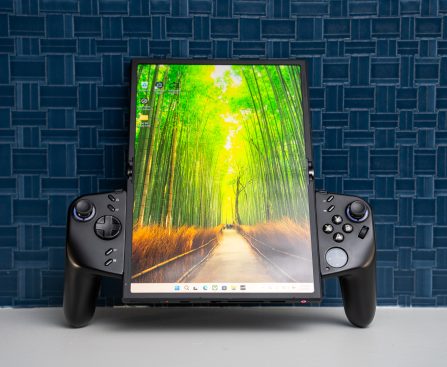
Every year, Lenovo introduces concept products at the Mobile World Congress (MWC), along with its latest range of laptops and desktop devices to highlight the innovative ideas it is developing. Occasionally, some of these products reach the consumer market, like Lenovo’s rollable display laptop, although this process can be lengthy. MWC 2026 followed a similar route, as Lenovo presented numerous computers that will soon be available for purchase. Additionally, the company revealed five concept devices, which include an AI companion that functions as a clock; a comparable AI companion concept for professional use; a glasses-free 3D laptop with dual screens; a foldable handheld gaming device; and a modular laptop.

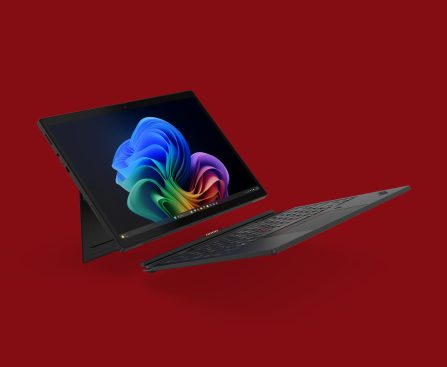
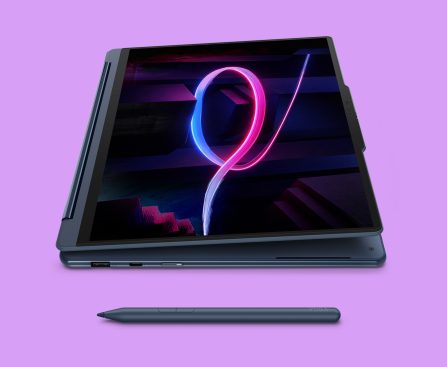
These devices enhance current technologies present in computing, hinting at future offerings from Lenovo’s Yoga, Legion, and ThinkBook laptop lines, provided that the presented innovations become market-ready. Moreover, Lenovo announced over a dozen new products at MWC 2026, such as the Legion Tab gaming tablet, the Yoga 9i 2-in-1 Aura Edition convertible laptop, the Yoga Slim 7i Aura Edition laptop, and six ThinkPad notebooks tailored for professionals, including the ThinkPad X13 Detachable.

The AI Work Companion Concept resembles a digital desk clock, but it is an AI-powered device designed to assist users throughout the day while also serving as a charging hub for devices. The AI functionalities may be particularly appealing to users who utilize AI tools for their work. Lenovo explains that the AI Work Companion Concept employs AI to synchronize with the user’s tasks and schedules across different devices to provide a daily agenda. Moreover, it will recommend work breaks to mitigate burnout and offer “playful interactions,” per Lenovo, to celebrate milestones such as task completions. This desk clock also includes customizable buttons to cater to user preferences and a display for additional content, as depicted in the image above. The AI Work Companion would likely require a connection to other computers to function, although this remains speculative.

With a similar title, the Lenovo AI Workmate Concept is another AI-driven concept introduced at MWC that aims to present users with a tangible AI assistant ready to tackle more complex tasks than the AI Work Companion. The AI Workmate resembles a desk robot (or a microphone) with a base and a body featuring a display at the top. This gadget is designed to be perpetually on, allowing users to engage with AI via voice for various tasks. Lenovo indicates that the AI Workmate will locally process AI requests and assist with multiple work activities, such as document scanning, summarization, and note organization.

The AI Workmate can aid users in crafting presentations and can even project content, serving as a secondary monitor. The device allows for various modes of interaction, including voice, gestures, writing, and spatial interaction, although the latter was not elaborated upon. Unlike the earlier AI Work Companion Concept, the AI Workmate has the potential to become a valuable desktop tool, assuming Lenovo successfully markets it.

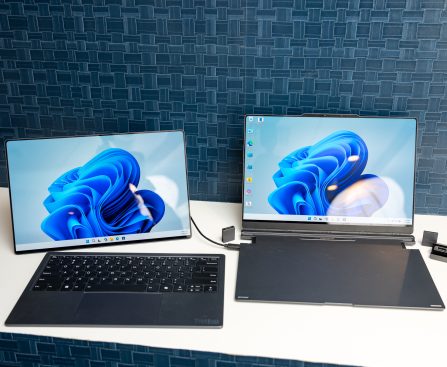
The ThinkBook Modular AI PC Concept is the type of computer that may catch the interest of a mobile professional. It boasts not one, but two displays that provide a significantly larger workspace than a standard laptop. One of the screens can be adjusted to various positions, operating as either a horizontal or vertical display mounted into a kickstand, or it can be positioned at the base of the laptop, taking the place of the detachable keyboard. The main screen of the ThinkBook measures 14 inches, matching the movable one. Together, they can create an estimated 19-inch viewing area, as stated by Lenovo.

The ports are also interchangeable, with the modular laptop accommodating USB-A, USB-C, and HDMI. Modules can connect via pogo pins, facilitating power and data transfer, according to Lenovo. As for its AI capabilities, Lenovo did not provide detailed information in its press release but noted that “AI-enabled experiences provide contextual assistance alongside primary tasks, demonstrating Lenovo’s ongoing exploration of modular, AI-driven business devices.”

Furthermore, Lenovo introduced the Lenovo Qira at the event, a Personal Ambient Intelligence solution set to be embedded in Lenovo and Motorola devices at the system level. Qira is intended to comprehend workflows and contexts across the user’s devices and provide assistance, including proactive actions. Qira is poised to begin deployment on more than 20 commercial devices within its PC lineup and appears to be the type of AI tool that the ThinkBook Modular AI PC concept could utilize if it transitions into a marketed product.

Similar to the modular laptop, the Yoga Book Pro 3D Concept also showcases two displays, but both are integrated within the laptop. The aim of the dual displays is to enable the device to create glasses-free 3D content that may benefit designers and other creators. This concept laptop operates on an Intel Core Ultra processor paired with an NVIDIA Ge.

This Foldable Screen Windows Gaming Handheld

Lenovo put a foldable display on a gaming handheld. The Legion Go Fold Concept is a Windows-based handheld with a flexible POLED display, detachable Joy-Con-like controllers, and a folio case to turn the whole thing into a mini laptop. You can use it as a standard Steam Deck-esque handheld with the display folded down to […]

Lenovo Unveils a Modular Laptop with Swappable Ports and a Dual Screen

One of Lenovo’s big laptop concepts for MWC 2026 is a modular ThinkBook with two screens. Officially called the ThinkBook Modular AI PC Concept, the proof-of-concept is a 14-inch productivity machine with two plug-and-play interchangeable ports and a second 14-inch display magnetically attached to the rear of its lid. The second display is removable, and […]

A Robot Arm with Puppy Dog Eyes Among Lenovo’s New Desktop AI Concepts

Alongside a handful of new laptop concepts (and a range of real products too), Lenovo used MWC to announce a pair of AI-based productivity companion concepts. Both are standalone desk devices designed to boost productivity while providing office workers with a bit of artificial dystopic companionship. Lenovo describes its AI Workmate Concept as an “always-on […]

The Outlook for Modular Laptops: Tackling Their Key Obstacle

We might earn a commission on purchases made through links.

Contemporary laptops have increased in capability and can last a full workday provided you’re not engaging in processor-demanding and battery-draining tasks such as video editing or gaming. Although companies have been tackling these two challenges in recent years, users have also noted a decrease in modularity as more firms adopt Apple’s approach of soldering critical elements to the motherboard, including RAM and SSDs.

In response to this trend, Framework was established in 2020. It assembled specialists from renowned brands in the field like Apple and Lenovo, aiming to develop laptops that are modular and repairable. Framework’s inaugural laptop debuted in 2021, successfully fulfilling the commitment to modularity and upgradability. The company has introduced several models since then, with the 2025 Framework Laptop 16 enabling upgrades to the mainboard, memory, storage, graphics card, and allows swapping of various other components.

The idea of modular and repairable laptops is indeed commendable and very much appreciated, potentially representing the future, especially in an industry that consistently opposes user repairs and upgrades through soldered parts. However, before the market can see modular laptops become a norm, there is still one final obstacle to overcome: cost. To be frank, modular laptops tend to be pricier compared to the typical single-build laptops.

Laptop modularity comes at a premium

Framework is undoubtedly the frontrunner in modular laptops, and its partnership with Nvidia and AMD to provide upgradeable GPUs in the second-generation Framework Laptop 16 was a significant achievement in the sector. However, to acquire one of the modular alternatives from the brand, you should be prepared to invest a bit more compared to a similar single-build laptop from other brands. For instance, consider the Acer Nitro 16 Gaming Laptop and see how it compares to the Framework Laptop 16 Performance Pro model.

The Framework is equipped with an AMD Ryzen 7 7840HS processor, 16 GB of memory, and 512 GB of storage. The Acer Nitro 16 features the same CPU and memory configuration; however, it boosts the storage capacity to 1 TB. The Acer Nitro 16 is priced at $1,179, while the Framework will cost you $1,649 (after a 6% discount). That’s a difference of $470 compared to the Acer, for half the storage. For the 2025 version of Framework Laptop 16 utilizing AMD’s AI 300 Strix Point series chips, pricing begins at $1,799 for a model with a Ryzen AI 7 350 CPU, 16 GB RAM, and 512 GB storage.

The Dell 16 Laptop features the same chip, double the memory and storage, and is available for just $858 on Amazon. Modular laptops also start at a significantly higher price point than traditional laptops. Yes, you may find lower initial prices on Framework’s site starting around $549, but that’s for the DIY models, which provide a basic laptop without a processor, memory, storage, or power adapter.

Affordability could popularize modular laptops

Effects of a Depleted Battery in Your Smart Thermostat

may even show a low-battery alert, which could leave users puzzled if they were unaware of this. In the Nest thermostat, in particular, you cannot replace the batteries; instead, you are expected to charge the device with a USB cable.

But what about older or different brand thermostats? How do you replace those batteries or deal with a low-power signal? It varies from one thermostat to another, as some feature replaceable and disposable batteries while others do not. What you need to keep in mind, though, is that the backup batteries serve as an additional power source even when the power in your home is stable and present. That battery powers the thermostat’s internal mechanisms, especially the control board that communicates with the heating or cooling system regarding its operations. If the battery fails, even with power still available, there is a risk that the device may not communicate effectively with the HVAC system, thereby failing to function as intended.

Sometimes, a thermostat may appear to be functioning properly with a screen that lights up, but in reality, it’s struggling to maintain the right temperatures or engage the automatic climate controls as scheduled. You might manage to utilize the basic functions of a Google Nest thermostat without internet access, but lacking power is a different scenario. The batteries guarantee sufficient voltage for the internal components at all times. Batteries are expected to last approximately eight months to a year of consistent use, and you should replace them on a regular basis, along with other upkeep tasks like changing air filters.

Why is the battery important in certain units?